

Connecting genetic risk to disease endpoints through the human blood plasma proteome
ONLINE SUPPLEMENTARY INFORMATION
Locus annotations
Locus 387
Top associations per target
| Target | cis/trans | Study | SNP | SNP location | Maj/min allele | MAF | N | βinv | seinv | Pinv | fclog | Plog | Praw |
|---|---|---|---|---|---|---|---|---|---|---|---|---|---|
| granzyme A | trans | Discovery | rs2853928 | 6:31,257,511 | C/A | 0.23 | 994 | -0.363 | 0.051 | 3.4×10⁻¹² | -1.080 | 2×10⁻¹⁰ | 2.1×10⁻⁶ |
| granzyme A | trans | Replication | rs2853928 | 6:31,257,511 | C/A | 0.11 | 337 | -0.230 | 0.093 | 0.014 | -1.080 | 0.016 | 0.036 |
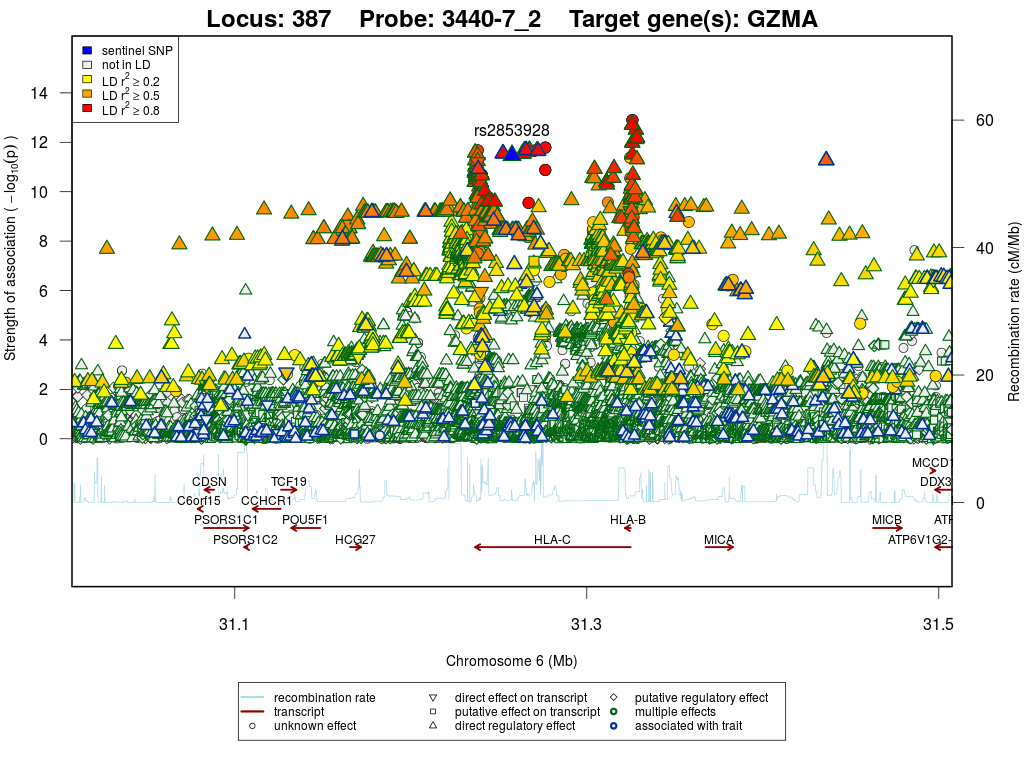
Regional association plots
Granzyme A (granzyme A)
Boxplots and histograms for top associations
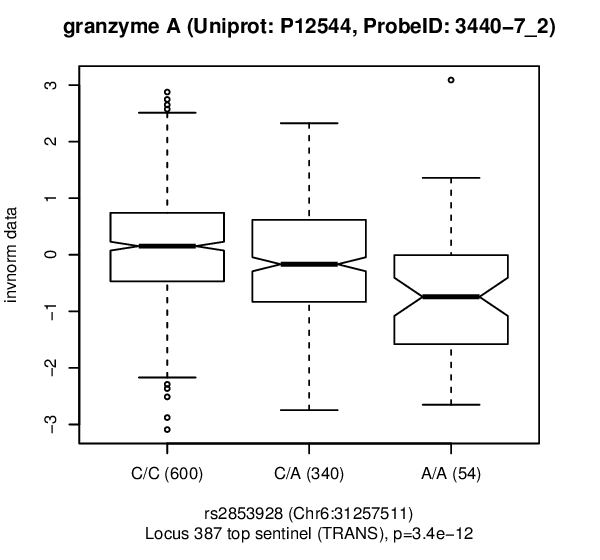
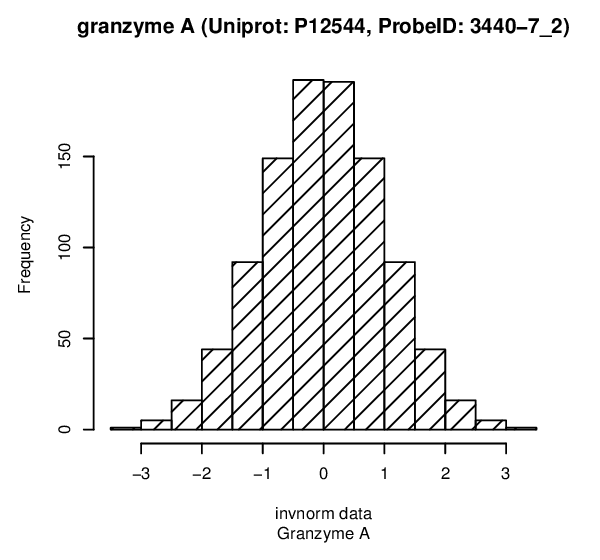
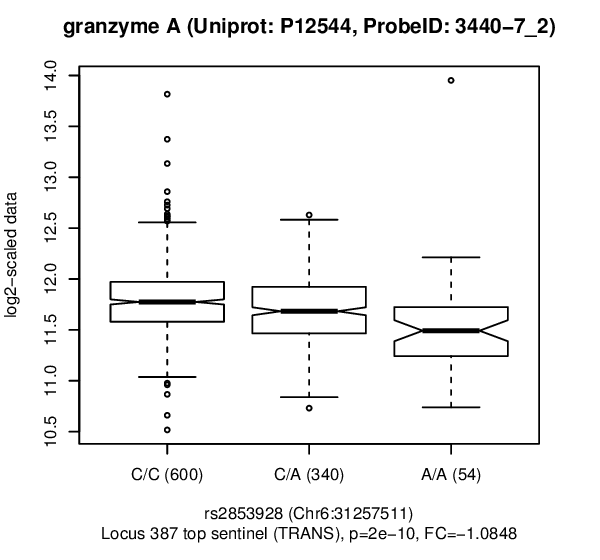
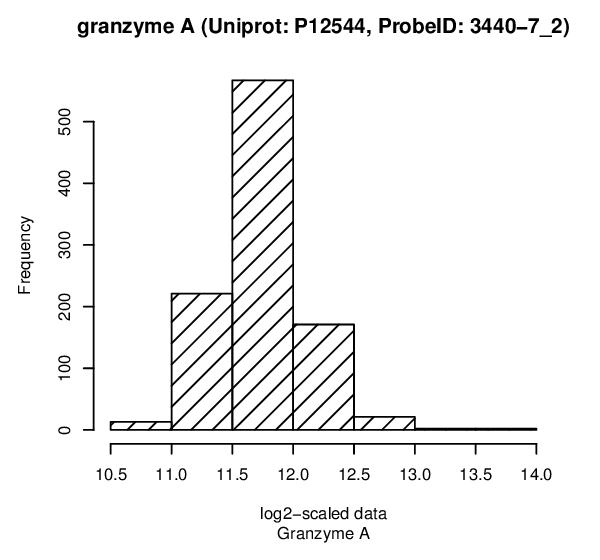
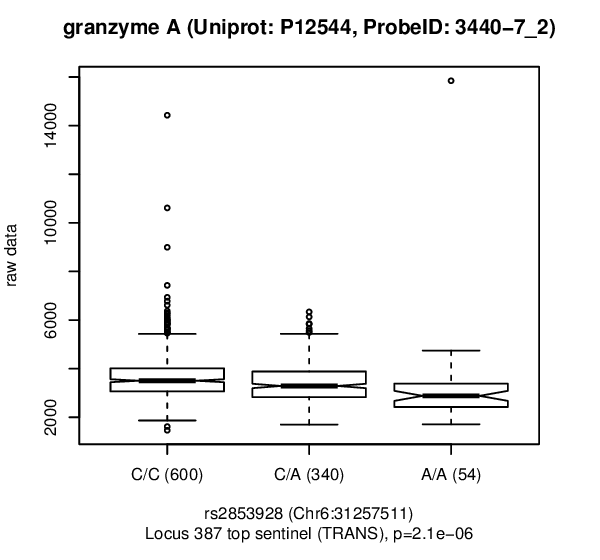
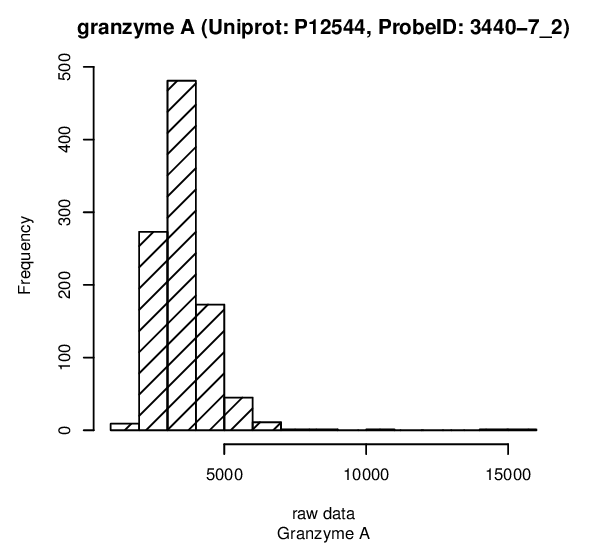
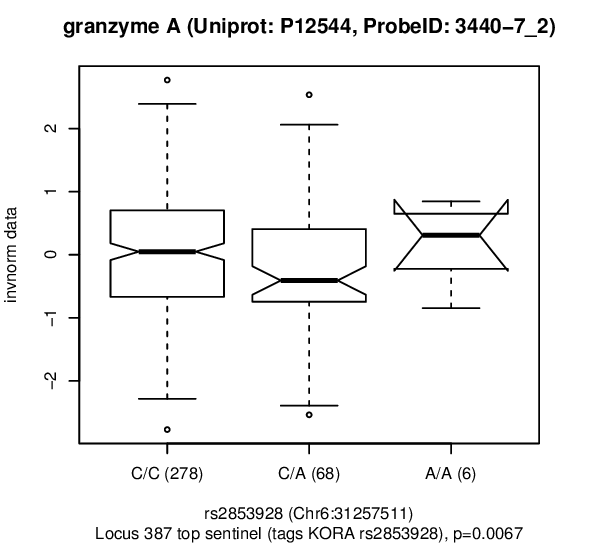
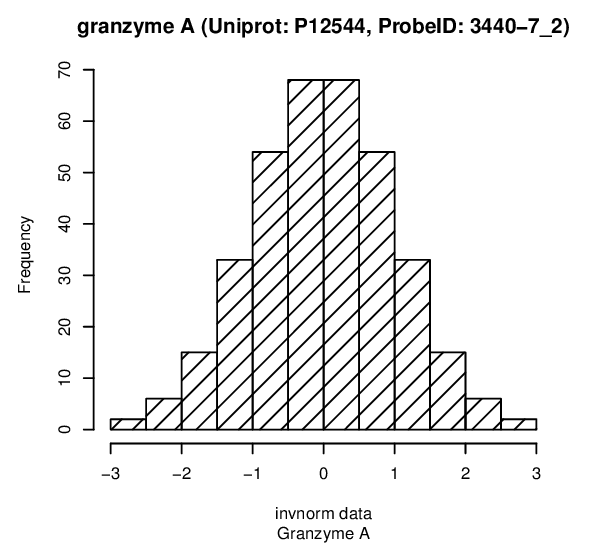
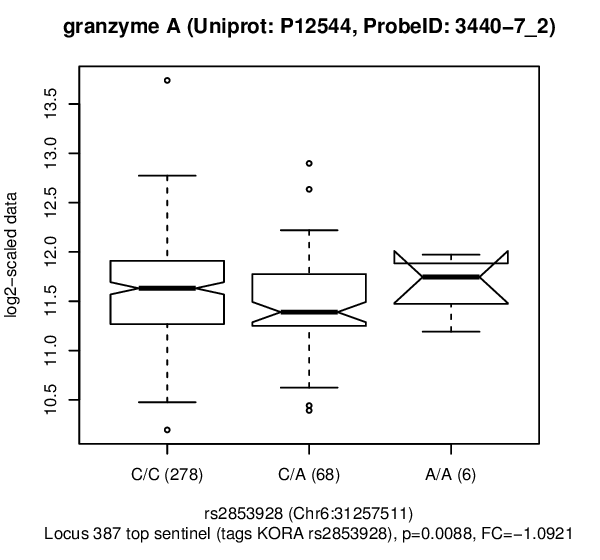
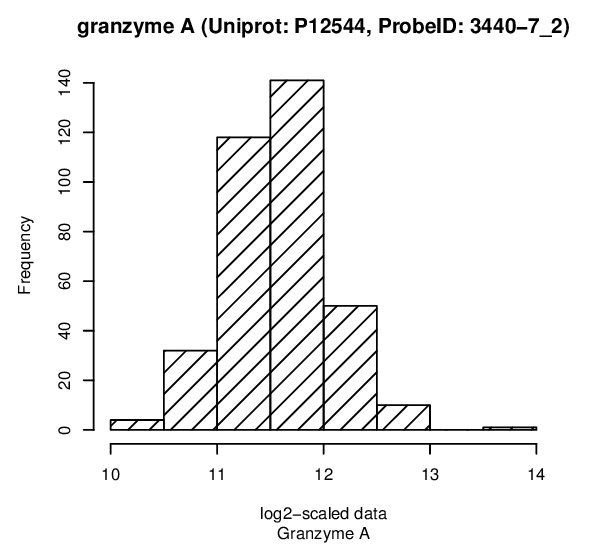
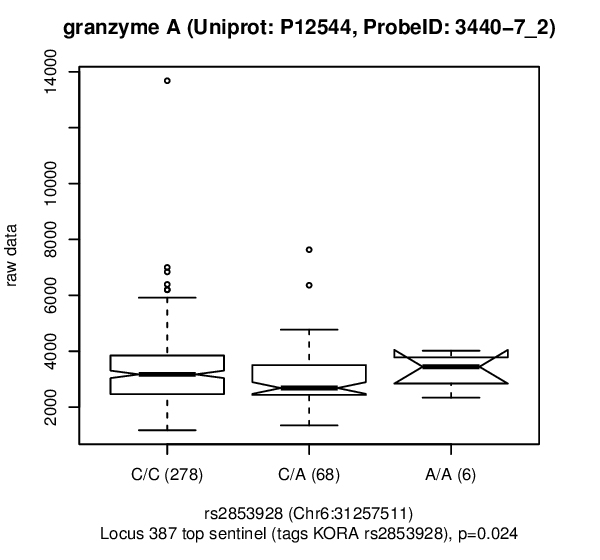
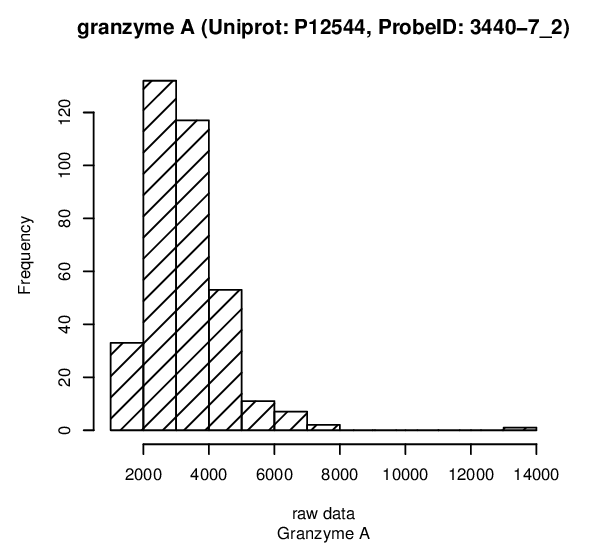
Granzyme A (granzyme A)
| Target (abbrv.) | granzyme A |
| Target (full name) | Granzyme A |
| Somalogic ID (Sequence ID) | SL004298 (3440-7_2) |
| Entrez Gene Symbol | GZMA |
| UniProt ID | P12544 |
| UniProt Comment |
|
| Pathway Interaction Database |
|
| Pathway Studio |
|
All locus annotations are based on the sentinel SNP (rs2853928) and 16 proxy variant(s) that is/are in linkage disequilibrium r2 ≥ 0.8. Linkage disequilibrium is based on data from the 1000 Genomes Project, phase 3 version 5, European population and was retrieved using SNiPA's Block Annotation feature.
Download the detailed results of SNiPA's block annotation (PDF)
Linked genes
| Genes hit or close-by |
|